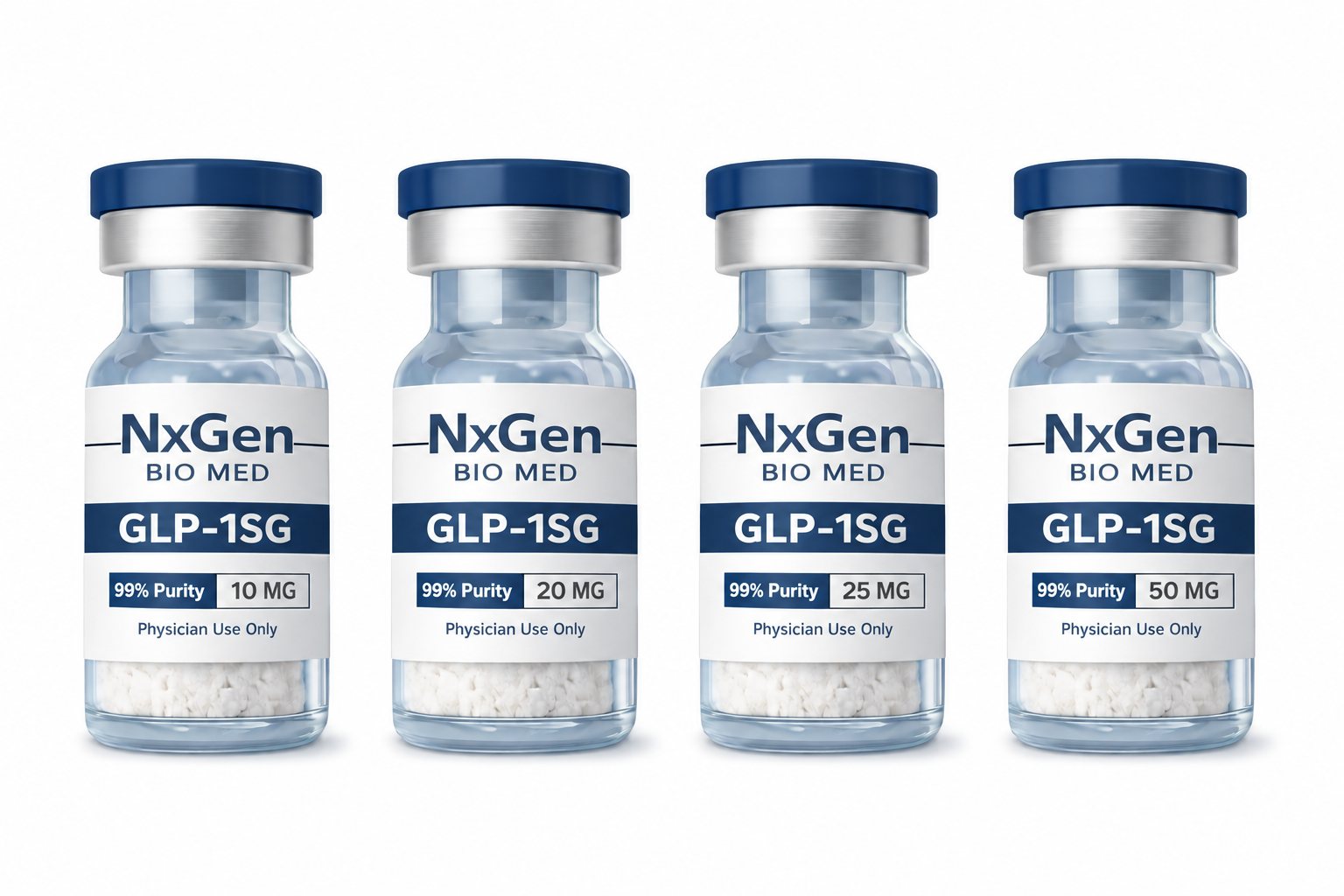
GLP-1SG Product Brief
1. Compound Overview
GLP-1SG is a synthetic peptide analog of glucagon-like peptide‑1 (GLP‑1).
It has been widely studied for its role in glucose metabolism, appetite regulation, and metabolic signaling pathways.
GLP-1SG mimics the action of endogenous GLP‑1 and has attracted extensive research interest in metabolic regulation, obesity pathways, and insulin signaling.
2. Mechanism of Interest
GLP-1SG is studied for several biological mechanisms:
- Activation of GLP‑1 receptors involved in glucose regulation
• Stimulation of insulin secretion in response to elevated glucose levels
• Suppression of glucagon release
• Influence on appetite regulation pathways in the central nervous system
• Potential impact on gastric emptying and metabolic signaling networks
3. Research Areas Being Explored
- Glucose metabolism research
• Obesity and weight regulation studies
• Appetite signaling pathways
• Insulin sensitivity research
• Metabolic syndrome and endocrine signaling studies
4. Safety and Regulatory Notes
GLP-1SG is approved in certain clinical contexts for specific medical indications.
Research versions are commonly distributed for laboratory study.
This document is intended for informational and research product description purposes only.
| Size | 20mg, 25mg, 30mg, 10mg |
|---|
Be the first to review “GLP-1SG” Cancel reply
Reviews
There are no reviews yet.